
Hold and Win Titles RTP Payout and Volatility Guide

Hold and Win Titles is a unique style of slot that merges fixed-reel layouts with a bonus round where special symbols lock in place while the remaining reels continue to spin. Grasping the payout percentage, volatility profile and the exact mechanics of the hold-and-win feature is vital for anyone who wishes to assess whether these games match their bankroll and playing style. This guide details the concrete numbers you should check, the reel configurations you will meet and the practical steps you can take to manage risk while chasing the fixed or progressive jackpots that shape the format.
Volatility Profiles and How They Affect Your Balance
Hold & Win Slots are typically medium-to-high volatility. The main game delivers frequent small line wins, but the majority of the return is centered around the hold-and-win bonus. This results in extended periods of empty spins punctuated by infrequent big wins. An effective method to gauge the precise variance is to check the hit frequency of the bonus trigger. If six coins hit roughly once every 180 spins, you should expect the bonus to appear roughly every 30–40 minutes at a speed of six spins per minute.
Because variance is front-loaded into the bonus, your session length should be planned around that interval. A quick 15-minute round is unlikely to capture the bonus round, whereas a 60-minute play offers a reasonable probability of encountering at least one full hold-and-win bonus. Defining a clear loss boundary before you start avoids the typical error of increasing stakes after a dry spell in an attempt to force the feature activation.
Grid Configurations, Paylines and Ways-to-Win Formats
The majority of Hold and Win Games employ a 5×3 grid with 10, 20 or 25 set paylines. A more modest but expanding number of titles employ a 5×4 layout with 40 lines or a 6×3 layout with 30 lines. Paylines are fixed, so you are unable to reduce the number of active lines to lower your total stake; the only variable is the coin value or bet level. This structure preserves the maths consistent across all stake sizes and prevents players from inadvertently diluting the RTP by deactivating lines.
Some newer releases replace traditional paylines with a ways-to-win engine that counts matching symbols on adjacent reels irrespective of exact position. In a 5-reel ways game you require matching symbols on reels one and two, two and three, and so on, with each additional reel multiplying the number of possible combinations. The hold-and-win bonus still triggers on six or more coins, but the base-game hit rate is usually higher because ways games produce more small wins. The trade-off is that the maximum line win is often lower, shifting even more of the RTP into the bonus round.
Playing Guide: Detailed Session Walkthrough
Initiate by starting the game and activating the information panel. Observe the published RTP, the maximum win multiplier and the precise coin values at your current stake. Set a loss limit amounting to 50–75 spins at that stake; this offers you adequate time to see at least one bonus trigger while protecting your bankroll from extended dry spells.
Turn the reels at a steady pace. Observe the coin counter in the bottom right; once six coins land, the hold-and-win round starts automatically. During respins, avoid the urge to raise the stake; the bonus round uses the same stake you started with. If the grid fills completely you will collect every shown value plus any jackpot labels. When the round forum.dcs.world ends, the total is added to your balance and you return to the base game. Continue the process, modifying your loss limit after each bonus rather than after each spin.
Bonus Features: Complimentary Spins, Wild Icons and Scatters
Although the hold-and-win round is the headline feature, many titles layer additional adjustments onto the base game. Scatters usually act as bonus triggers; three plus will award eight to twelve free spins. In those spins the hold-and-win coins keep their adhesive nature, but the re-spin counter is swapped by a fixed number of gratis spins. This combined approach gives you two separate paths to the same coin collection mechanic and can produce prolonged sequences when free spins repeatedly deliver coins into the grid.
Wild icons occur on reels two, three and four in most 5×3 layouts. They substitute for all standard symbols but at no time for the unique coins or scatters. Some games add a multiplier wild that applies a ×2 or ×3 multiplier to any row win it finishes. Because the multiplier works only to row wins and not to coin amounts, its general contribution to return to player is small, yet it offers a nice increase during the main game and can transform an otherwise even spin into a small profit.
Well-known Providers and Notable Titles
Playson’s Coin Strike: Hold and Win and Coin Trio: Hold and Win both use a 5×3, 10-line layout with a 96.1 % RTP and a 2,500× maximum win. The coin values change with stake, so a £1.00 bet can generate Mini and Minor jackpots worth £20 and £100 respectively, while the fixed Major pays £500. The Grand is a progressive that starts at £5,000 and grows until claimed.
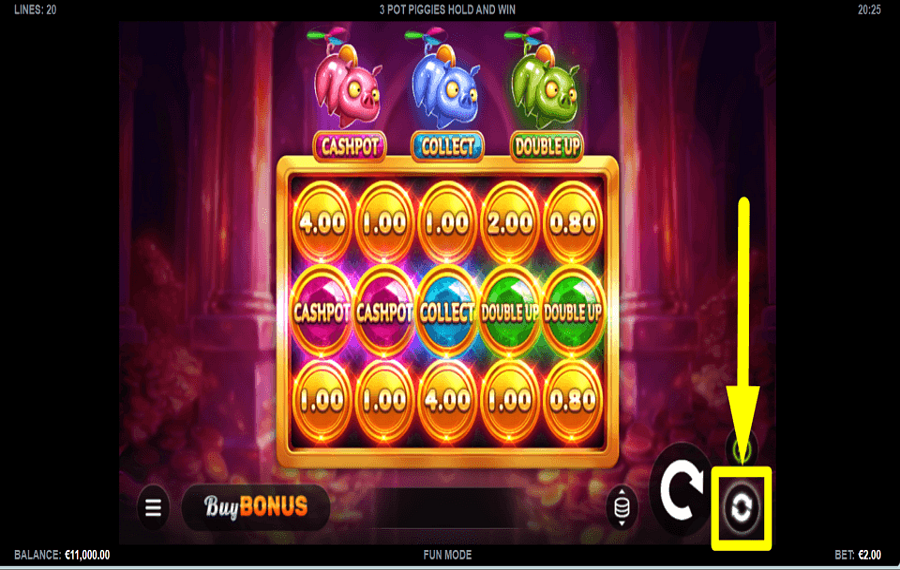
BGaming’s 3 Super 7’s Hold and Win and 5 Super 7’s Hold and Win shift the grid to 5×4 and 6×3 respectively, raising the number of coin landing positions and therefore the bonus frequency. Both titles list an RTP of 96.4 % and promote a 4,000× cap. Because the reels are taller, the base-game hit rate rises, but the average coin value is lower to keep the overall RTP unchanged. Consulting the paytable before you play will show you the exact coin denominations for your chosen stake.
Comprehending Hold and Win Functioning
Hold and Win Games revolve around a two-stage framework: the base game and a separate hold-and-win bonus. In the base game you commonly see a 5×3 reel grid with 10 to 25 fixed paylines. Regular line wins pay left to right, but the real action begins when six or more special coin symbols land anywhere on the reels. Those coins lock in place, the rest of the grid resets to blank positions, and you obtain three respins. Every new coin that lands sticks and resets the counter, giving the round a chance to extend well beyond the initial three spins. The round ends only when you run out of respins or fill the entire grid, at which point the values shown on the coins are added together and paid out.
The coins themselves carry either cash amounts or jackpot labels. A typical grid offers four jackpot tiers: Mini, Minor, Major and Grand. The Grand can be fixed or progressive, depending on the title. Because the bonus round is self-contained, the RTP contribution from the hold-and-win feature is calculated separately from the base game. Providers release an overall RTP figure, but they rarely break out the exact split; the only reliable way to verify is to open the game’s information panel before you play.
FAQ
Does the RTP remain identical at every stake?
Indeed. Hold and Win Games calculate RTP as a long run average across all stake levels. The only exception is when a provider offers two distinct RTP configurations; in such a scenario the smaller value applies at every stake on that configuration. Be sure to check the visible RTP in the information panel prior to starting a session.
Can I change the active payline count?
No. Paylines are fixed in every Hold and Win title. The only adjustable parameters are coin value and bet level, each of which affect all lines in the same way. This structure keeps the maths consistent and avoids accidental RTP reduction via line deactivation.
How long does the hold-and-win bonus typically last?
The round commences with three respins. Each coin restarts the counter, thus the length depends on how frequently coins land. On average you get between six and ten respins, but streaks of ten or more may happen when the grid is rapidly filling. The whole sequence seldom surpasses thirty seconds of actual spinning time.
Can progressive jackpots be available in the UK?
Indeed, only when the Grand jackpot comes entirely from the game’s RTP instead of from an operator-run pool. The stake-to-prize ratio rules still apply, meaning the top cash payout has a cap. Review the paytable for the present progressive seed and any visible cap before you play.
Stake Range, Coin Denominations and Maximum Exposure
Stake flexibility differs greatly. Starting bets commence at 0.10 per spin, Hold and Win Game registration, reached by selecting the lowest coin value of 0.01 and one coin per line. The upper limit on UK-licensed sites is capped at £2.00 per spin for players under 25 and £5.00 for players 25 and over, following the 2021 stake-restriction rules. These caps affect every spin, encompassing the hold-and-win respins, so you cannot raise your stake once the bonus has begun.
Max exposure, shown as a multiple of the total stake, spans from 1,000× to 5,000× in fixed-jackpot titles and can surpass 10,000× when a progressive Grand is present. The 5,000× cap is typical because it satisfies the UK’s stake-to-prize ratio without requiring operator-side progressive pools. Make sure to verify the promoted maximum win in the paytable; some games display the figure as a cash amount rather than a multiplier, which can be confusing if the stake displayed is not your actual bet.
Common RTP Ranges Throughout Hold and Win Titles
Many Hold and Win Games sit between 95.5 % and 96.8 % RTP when played at the maximum bet. The lower end of that range usually appears in games that feature a progressive Grand jackpot funded by a small percentage of every stake. Higher RTP figures are more common in fixed-jackpot versions where the entire prize pool is resolved from the base RTP rather than from an accumulating pool. Because the difference between 95.5 % and 96.8 % can translate into several hundred pounds over a long session, it benefits to compare the published RTP on each title’s help screen before allocating a bankroll.
Certain studios offer two RTP configurations for the same game, one for UK-licensed sites and another for other markets. The UK version is almost always the lower of the two because of stricter stake-to-prize ratios. If you fail to locate the RTP inside the game, review the operator’s game rules page; under UK rules the figure must be displayed either in the paytable or in a separate information tab. Treat any game that refuses to publish its RTP as an immediate red flag.